


GROWLR: Gay Bears Near You
3.611.43K Reviews
App Specs
- Version
- 16.50.0
- Updated On
- License
- Free
- Downloads
- 5,000,000+
- Developer
- GROWLR, LLC
- Categories
- Social
- Platform
- Android
Screenshots
 Analysis by AppCompare
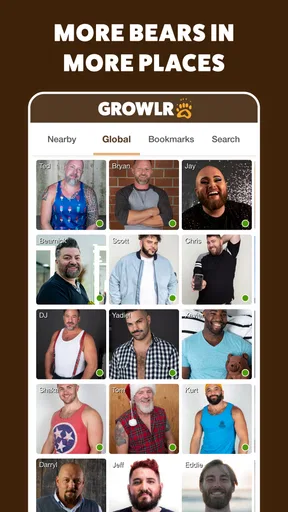
I approached GROWLR: Gay Bears Near You as a social app for gay men who identify with, or feel comfortable around, the bear community. Its purpose is easy to understand: help users discover people and conversations nearby rather than treating social connection as a completely global, anonymous stream. In my experience, that local focus can make the app feel more practical than a general social network when you want to meet people with a shared identity and similar interests.
That same focus also means I would not treat it as a casual, consequence-free browsing tool. Location-aware social apps involve personal choices about visibility, messages, photos, and meetings. My overall impression is that GROWLR can be useful when I stay deliberate about what I reveal and whom I engage with. It is less suitable for anyone who wants a broad, neutral social platform with minimal profile exposure.
How GROWLR fits into the social-app landscape
I see GROWLR’s place among social apps as a deliberate trade-off: its bear-community focus can make local discovery more relevant than a general feed, but that relevance depends on how thoughtfully I manage visibility and conversations. The next section looks at a practical way to build a repeatable routine, so nearby browsing stays purposeful rather than turning into an open-ended check of profiles and messages.
A focused community rather than a general-purpose network
GROWLR, developed by GROWLR, LLC, sits in the social category and is aimed specifically at gay bears and people interested in meeting them. That specialization is its clearest advantage. On a mainstream social app, I may need to explain my interests, filter through a much wider audience, or rely on indirect signals to find compatible people. Here, the intended community is part of the app’s identity from the start.
The app has been available since June 21, 2011, and its reach is substantial, with over five million installs. That does not guarantee that I will find an active conversation in every neighborhood, but it does suggest that the service is more established than a newly launched niche platform. Its average rating is 3.6 from around fifty-five thousand ratings, alongside roughly eleven thousand written reviews. I read that combination as a reason to keep expectations balanced: many people clearly use it, but the experience is not universally smooth.
The mature audience matters. GROWLR is rated Mature 17+, so I would not recommend it for teenagers or anyone who is uncomfortable with adult-oriented social spaces. Even when a user joins mainly to chat, the surrounding community can involve dating, flirtation, and direct personal conversations. That makes basic judgment more important than simply installing the app and accepting every interaction.
What I would use it for in everyday life
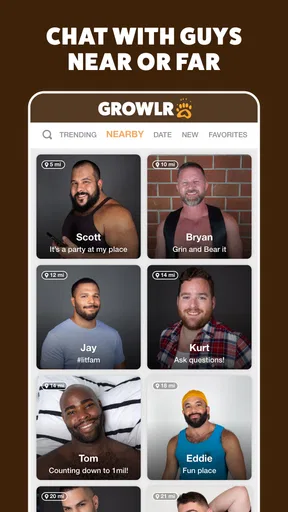
A realistic use case is arriving in a new city for work or a weekend trip. Instead of opening a general network and hoping to locate the right community, I could use GROWLR to see who is nearby, start a conversation, and learn which local places or events are familiar to other users. I would treat the first exchange as a way to establish comfort, not as an automatic invitation to meet.
Worth Reading Before You Choose

EA SPORTS FC Mobile 26 Is a Bigger Football Game, but It Takes Time

Flipboard Shows What News Apps Must Do Beyond the Feed

Switching to Android Auto Means Rethinking Your Driving Routine

Google Calendar Makes a Crowded Week Easier to Manage

Ludo King Makes the Most of the Minutes Between Plans

Baby Panda World Brings Quick Play to Modern Phones, but Its Game Library Feels Busy
It can also work for someone who lives outside a large urban center and wants a more targeted way to connect. The nearby focus may reveal people I would not encounter through ordinary social circles. At the same time, the value depends heavily on local activity. A large overall install base does not mean every area has the same number of available users, so I would judge the app by the quality and responsiveness of conversations near me rather than by its global presence.
For long-distance friendship, broad interest groups, or professional networking, I would choose a different type of platform. GROWLR’s strength is its specific social context; that is also what narrows its usefulness. It is not a replacement for a general messaging service, a large interest-based community, or a conventional dating app built around a wider range of identities and relationship goals.
Trust starts with what I can actually control
When I review a location-oriented social app, I look first at visible choices rather than assuming that popularity equals safety. I want to know what I am sharing, who can contact me, how easily I can stop an unwanted interaction, and whether I can adjust my profile without deleting my entire account. With GROWLR, I would make those checks part of setup and revisit them before becoming active.
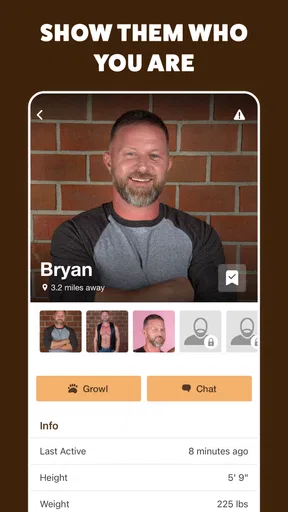
I would begin with the smallest profile that still lets other people understand why I am there. A clear photo and a short description can be enough to start a conversation; a full name, workplace, exact home area, or detailed daily routine is unnecessary at the beginning. This is not about being secretive. It is about separating a social introduction from information that could identify or locate me offline.
I would also pay attention to account controls as I use the app. If a conversation becomes uncomfortable, the practical question is whether I can stop engaging and use the available reporting or blocking choices. I would not continue replying merely because I had already started a chat. A useful social app should support the user’s ability to change their mind, and I would make use of those controls early rather than waiting for a situation to become serious.
Permissions and privacy deserve an active review
I would not grant every permission automatically. If the app requests access to location, I would consider whether I need precise location or whether a less exact option is enough for my purpose. I would also check the operating system’s permission settings after installation, because those settings give me a direct way to revise access later. The important point is not to assume that a location-based service needs unlimited access at every moment.
The same approach applies to photos, notifications, and contacts. I would allow photo access only in the way that matches my phone’s available choices, and I would disable notifications that reveal message previews on a shared or visible lock screen. I would not sync contacts simply for convenience unless I understood why I wanted that function. These small decisions reduce accidental disclosure without preventing ordinary use.
Because privacy information and app behavior can change, I would review the privacy details shown in the app and in the relevant app store before creating a profile. I would look for explanations of collected information, sharing practices, retention, and account deletion. I would not infer that a feature is private merely because it feels private, and I would not treat a familiar brand name as proof that every setting is configured safely by default.
Where sensitive moments appear
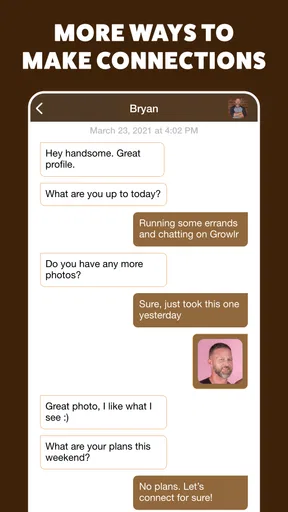
The most sensitive moment is usually not installation; it is the transition from browsing to personal contact. A nearby profile can feel familiar because of shared identity or distance, but that does not establish trust. I would avoid sending intimate images, financial information, identity documents, or details that could be used to locate me. I would also be cautious when someone quickly pushes me away from the app to another messaging service.
Moving a conversation elsewhere can be reasonable, but I would do it only after I had enough confidence in the person and understood what information the new service exposes. A separate username or account can help keep social activity apart from work and family communication. I would not interpret a request for my phone number, social profile, or home address as a normal requirement for friendship.
Meeting someone offline needs the same gradual approach. I would choose a public place, tell a trusted person where I am going, arrange my own transportation, and keep the first meeting short enough that leaving is easy. I would not allow the app’s nearby design to create a false sense of familiarity. Distance is a discovery tool, not a character reference.
Scams are another reason to slow down. Urgent requests for money, gift cards, travel payments, or help with an emergency would end the conversation for me. I would be especially wary of profiles that avoid ordinary questions, refuse reasonable verification, or create pressure to act immediately. Reporting and blocking are more useful when I use them promptly instead of trying to investigate a suspicious person on my own.
Practical ways to keep control of the experience
My preferred workflow would be simple. I would create a limited profile, check every visibility and contact option I can find, and spend the first session observing how conversations work. I would then make one small change at a time, such as adding a general interest or adjusting notifications, rather than filling in everything immediately. This makes it easier to identify which choice created an unwanted result.
I would keep conversations inside the app until the other person shows consistent behavior. Consistency means answering normal questions, respecting boundaries, and avoiding pressure. If I do move to another service, I would use an account that does not expose my workplace, family connections, or personal address. This is a useful trade-off: extra separation takes a little effort, but it gives me more room to step back if the interaction changes.
I would also review old conversations and profile details from time to time. A photo that was harmless months ago may reveal a new workplace or regular location. A profile can become more identifying as separate details accumulate. Removing unnecessary information is not a one-time setup task; it is part of using a social app responsibly.
For users who are particularly privacy-conscious, I would recommend using the operating system’s permission controls alongside the app’s own settings. The app can offer choices, but the phone’s controls provide another checkpoint. I would keep location access as limited as my intended use allows, turn off lock-screen previews if messages could expose private information, and remove access that I no longer need.
Version, cost, and the practical trade-off
The current version is 16.50.0, and the app is free to download. That makes it easy to test without paying before I know whether the local community is active or whether the interface suits me. However, free access does not mean every part of the experience is necessarily without cost: in-app purchases range from $0.99 to $99.99 per item. I would check the price of each optional purchase carefully and avoid spending until I had used the core experience long enough to decide whether it is genuinely useful.
The minimum operating-system requirement is Android 7.0, which makes the app accessible on many older Android devices. I would still keep the phone updated where possible, because account security depends on the wider device environment as well as the app itself. A compatible operating system is only a starting point, not a guarantee of a private or trouble-free experience.
I would not judge the app solely by its rating. An average of 3.6 indicates a mixed reception, but ratings combine different phones, regions, expectations, and versions. The written feedback can be more revealing when I want to understand recurring friction. I would look for comments about reliability, account management, messaging, and local activity, while remembering that individual experiences may not match my own neighborhood or device.
Who will appreciate it, and who should skip it
I think GROWLR is a good fit for an adult user who wants a focused bear-community app, values nearby discovery, and is willing to manage personal boundaries carefully. It may be especially useful for someone relocating, traveling, or trying to find a social circle that is difficult to reach through everyday life. The app’s identity gives conversations a clearer starting point than a general social network.
I would suggest looking elsewhere if you want a platform with a broad, mixed audience, a strong professional purpose, or a highly structured dating process. I would also skip it if location-based discovery makes you uncomfortable or if you are likely to share personal information quickly under social pressure. A niche app cannot compensate for a mismatch between its design and your privacy preferences.
It is also not the right choice for anyone under the Mature 17+ age rating. Parents should not treat it as a general social app for younger users, and adults who are uncomfortable with mature conversations should choose a service whose community and purpose are better aligned with that preference.
My cautious verdict after weighing the choices
GROWLR has a clear reason to exist: it makes a specific community easier to find, especially when nearby connection matters. I appreciate that focus more than I would appreciate a generic stream full of unrelated profiles. The free entry point also makes it practical to test, provided I remember that optional purchases can become expensive and that local activity will determine much of the value.
My recommendation comes with conditions. I would use it with a limited profile, conservative permissions, restrained notifications, and a slow approach to meeting anyone. I would treat blocking, reporting, and account settings as normal tools rather than emergency measures. Most importantly, I would verify privacy choices through the app and phone settings instead of assuming that a social platform’s defaults match my needs.
In short, GROWLR is worth trying for an adult gay bear-community user who wants targeted local social discovery and is comfortable taking responsibility for privacy decisions. It is not the app I would hand to someone seeking a completely general network or effortless anonymity. The best experience comes from using its community focus without surrendering control over your personal information.
Pros
- Simple interface makes browsing nearby bear profiles quick and convenient.
- Large international community helps users connect while traveling.
- Detailed profiles can reveal interests
- preferences
- and relationship goals.
- Private messaging supports one-to-one conversations after finding a match.
- Location-based discovery makes finding nearby users straightforward.
Cons
- Some useful features may require a premium subscription.
- Location-based matching can be less useful in smaller towns or rural areas.
- Profile quality varies
- with some accounts offering very little information.
- Users may encounter inactive profiles or delayed responses.
- Privacy-conscious users may dislike sharing approximate location data.
FAQs for GROWLR: Gay Bears Near You
What is GROWLR: Gay Bears Near You used for?
GROWLR is a social and dating app designed primarily for gay, bisexual, and bi-curious men who identify with the bear community or appreciate its culture. After creating a profile, users can browse nearby members, exchange messages, share photos, and discover people based on location and interests. It can be used for dating, friendship, conversation, or finding local community connections, depending on each user’s goals.
Is GROWLR: Gay Bears Near You free to download and use?
The app can generally be downloaded at no initial cost, allowing users to create an account, set up a profile, browse other members, and use selected communication features. However, some functions may be restricted or supported by optional in-app purchases or premium access. Before subscribing, review the current pricing, renewal terms, and available features in the Google Play Store or Apple App Store, since plans can vary by platform and region.
How does GROWLR protect user privacy and personal information?
Because GROWLR is a location-based social app, users should pay close attention to privacy settings before becoming active. Avoid publishing your exact home, workplace, or other sensitive details, and only share private photos or contact information with people you trust. Review profile visibility, location options, blocking and reporting tools, and the app’s privacy policy. Availability of specific controls may change with updates, so check the current settings regularly.
Can I use GROWLR without revealing my exact location?
GROWLR uses location-related information to help members discover nearby users, but displaying a precise location can create unnecessary privacy risks. Depending on the current version and device permissions, you may be able to limit location access or adjust how much information appears on your profile. It is best to use approximate distance features when available, disable location permission when it is not needed, and avoid meeting anyone until you have established trust.
Is GROWLR suitable for everyone, and what safety precautions should I take?
GROWLR is intended for adults and is focused on men interested in the bear and broader LGBTQ+ social or dating community. Users should follow the applicable age requirements and local laws, communicate respectfully, and report suspicious, abusive, or fraudulent profiles. If arranging an in-person meeting, choose a busy public location, tell a friend where you are going, use your own transportation, and never send money or sensitive account information to another member.


